
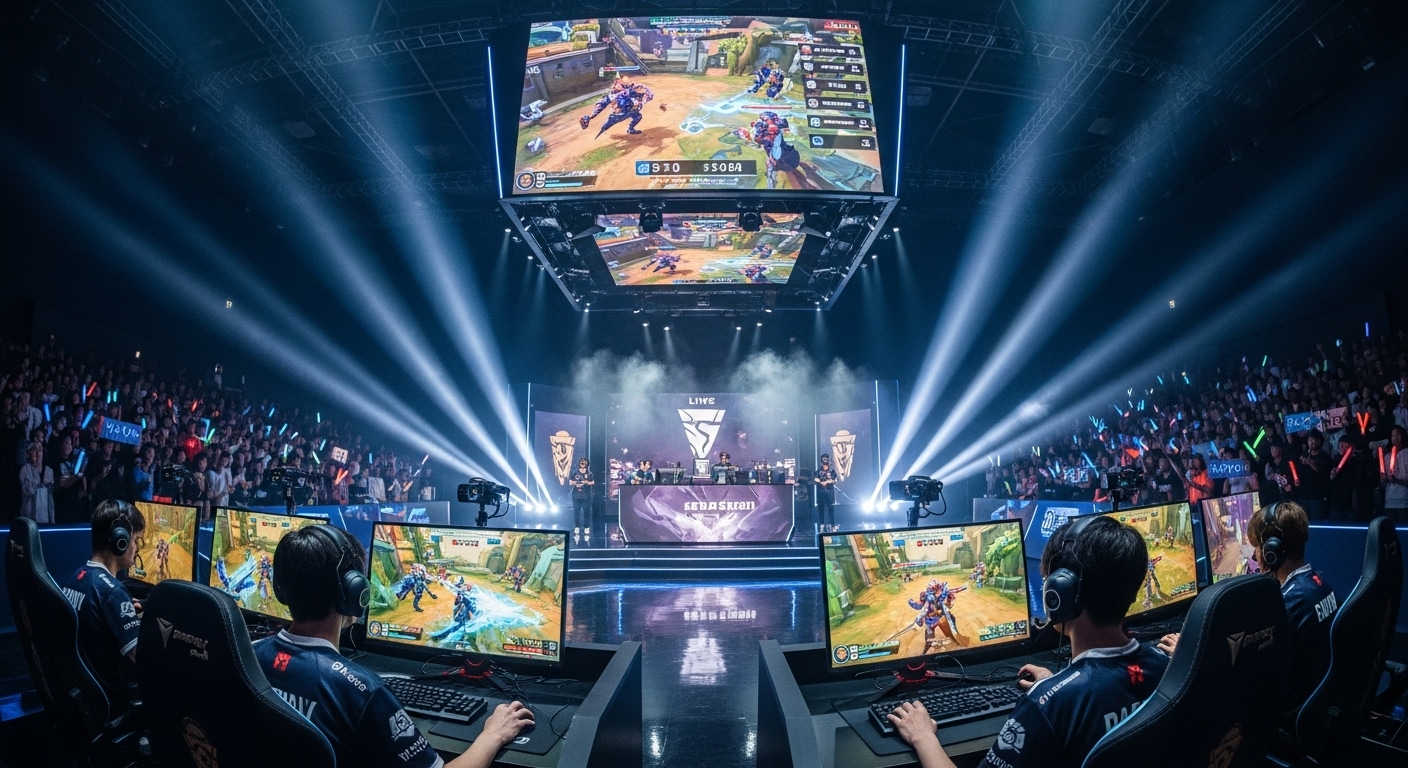
Esports has evolved from humble beginnings to a global phenomenon, with millions of fans, players, and organizations involved in this fast-growing industry. The term “esports” refers to competitive video gaming, where professional players and teams battle it out in various titles for glory, fame, and monetary rewards. But how did it all begin? What made esports the massive cultural force it is today? This blog post will explore the origins, growth, and future of esports, examining its impact on gaming, entertainment, and society as a whole.
The Early Days of Esports
The origins of esports can be traced back to the early days of video gaming itself. In the 1970s and 1980s, arcade games like Pong and Space Invaders dominated the gaming scene. While these early games were not yet competitive in the modern sense, they set the stage for competitive gaming in the years to come.
The first true esports event, often cited as the birth of competitive gaming, occurred in 1972. The event, called the Intergalactic Spacewar Olympics, was held at Stanford University and featured the game Spacewar, one of the first video games to gain popularity in academic circles. This small-scale event was a precursor to the larger esports tournaments we see today.
In the years following, arcade games such as Pac-Man and Donkey Kong became staples of gaming culture, but it wasn’t until the 1990s that esports began to take on a more formal shape. During this period, multiplayer games like Doom (1993) and Warcraft (1994) were introduced, offering the first truly competitive experiences online.
The Rise of LAN Tournaments in the Late ’90s
In the late 1990s, local area network (LAN) gaming tournaments began to emerge. LAN events allowed players to connect their computers locally, forming the backbone of competitive gaming for the next decade. One of the most important events to emerge during this period was the Quake tournaments, which were held in various parts of the world.
Quake, released in 1996 by id Software, was one of the first multiplayer shooters to become a competitive game. Its fast-paced gameplay, coupled with a strong community of players, made it an instant hit in competitive circles. In 1997, the first major Quake tournament, the Red Annihilation Tournament, was held, with a $10,000 prize pool and professional players from around the world. This event was a milestone for esports and set a precedent for future tournaments.
By the late 1990s and early 2000s, esports events were becoming more formalized, with significant prizes, sponsorships, and media coverage starting to emerge. At the time, events were often organized by gaming communities and featured a wide range of games, from Counter-Strike to StarCraft.
The Explosion of Esports in the 2000s
As we entered the 2000s, the esports industry began to grow rapidly. This period marked the shift from small LAN parties to large-scale professional tournaments, thanks in large part to the rise of the internet and improvements in gaming hardware.
The Emergence of Major Esports Titles
In the early 2000s, several key video game titles helped propel esports into the mainstream. One of the most significant games to emerge during this period was Counter-Strike, which was released in 1999. The tactical shooter quickly became a staple in competitive gaming and remains one of the most popular esports titles to this day.
Similarly, StarCraft (1998) was a game that played a key role in the growth of esports, especially in South Korea. The South Korean gaming scene was incredibly supportive of professional gaming, and by the early 2000s, StarCraft tournaments were regularly broadcast on television. The game was so popular that it helped establish professional gaming as a career path for many players.
In 2002, the World Cyber Games (WCG) was founded, marking one of the first global competitions for esports. This event, which is often referred to as the “Olympics of Esports,” brought together players from around the world to compete in games like Warcraft III, StarCraft, and Counter-Strike. WCG provided the foundation for many of the esports leagues and tournaments that would follow in the coming years.
The Rise of Streaming and Online Tournaments
The 2000s also saw the rise of online streaming platforms, which were instrumental in making esports accessible to a global audience. Twitch, which was founded in 2011, became the leading platform for live-streaming gaming content. With millions of viewers tuning in to watch professional gamers compete, Twitch revolutionized the way people consumed esports, turning it into a form of entertainment that rivaled traditional sports.
Additionally, the development of platforms like YouTube Gaming allowed players and fans to watch competitive gaming content on-demand, further cementing esports’ position as a mainstream form of entertainment.
The Globalization of Esports
By the late 2000s and into the 2010s, esports had become a truly global phenomenon. Tournaments were now being held in cities across the world, and top players were becoming celebrities in their own right. But perhaps the most significant development in the esports ecosystem during this time was the rise of professional esports organizations.
These organizations, which are often backed by major investors and sponsors, provided players with the infrastructure, resources, and support they needed to succeed. Teams like Team Liquid, Fnatic, and Cloud9 began to dominate the esports scene, representing not just individual players but entire organizations dedicated to competitive gaming.
In addition to team-based esports, the 2010s also saw the rise of battle royale games like Fortnite and PUBG (PlayerUnknown’s Battlegrounds), which introduced a new format for esports competition. These games allowed for larger-scale tournaments with hundreds of players, further expanding the scope of esports competitions.
The Role of Sponsors and Advertisers in Esports
One of the driving forces behind the rapid growth of esports is the involvement of corporate sponsors and advertisers. Major companies like Intel, Coca-Cola, Nike, and Red Bull have all invested heavily in the esports industry, sponsoring events, teams, and players.
In fact, sponsorship is one of the main revenue sources for esports organizations. Tournaments like the League of Legends World Championship and The International for Dota 2 attract millions of viewers and offer multi-million-dollar prize pools, thanks in large part to the influx of sponsorship dollars.
Furthermore, advertising on streaming platforms such as Twitch has become a lucrative business, with brands targeting the highly engaged and passionate esports audience. This corporate involvement has helped esports mature from a niche hobby into a billion-dollar industry.
Esports in the Mainstream: A New Era of Entertainment
By the 2010s, esports had firmly cemented its place in the mainstream. Major networks such as ESPN began broadcasting esports events, and games like League of Legends and Overwatch were attracting millions of viewers worldwide. Esports also began to appear in traditional sports arenas, with events held in famous venues like the Staples Center in Los Angeles and the Barclays Center in Brooklyn.
The addition of esports to the Asian Games as a demonstration sport in 2018 and its potential inclusion in the 2022 Asian Games further solidified esports as a legitimate form of competition.
The Future of Esports: What’s Next?
As we look toward the future, the potential of esports seems limitless. The continued growth of online streaming and the increasing number of professional leagues and tournaments point to a future where esports may become as mainstream as traditional sports.
The introduction of virtual reality (VR) and augmented reality (AR) technologies could also play a significant role in shaping the future of esports. These technologies would allow for more immersive experiences, giving both players and viewers the chance to interact with esports in entirely new ways.
Moreover, the continued rise of mobile esports, particularly in Asia, suggests that the next wave of esports fans may come from players using smartphones and tablets to engage with competitive gaming. Mobile games like PUBG Mobile and Arena of Valor have already gained massive followings, with tournaments that rival those of PC and console esports.
Another trend to keep an eye on is the integration of esports with traditional sports. As the lines between esports and traditional sports continue to blur, we may see even more partnerships between professional gaming organizations and established sports leagues like the NBA or NFL.
Conclusion
From its humble beginnings in the 1970s to its current status as a multi-billion-dollar industry, esports has come a long way. What started as small LAN parties and tournaments has grown into a global powerhouse of entertainment, attracting millions of fans, players, and organizations around the world. As technology continues to evolve and the esports ecosystem expands, the future of competitive gaming looks incredibly bright. Whether you’re a player, a fan, or just an observer, esports has something to offer everyone, and it’s clear that this phenomenon is here to stay.