
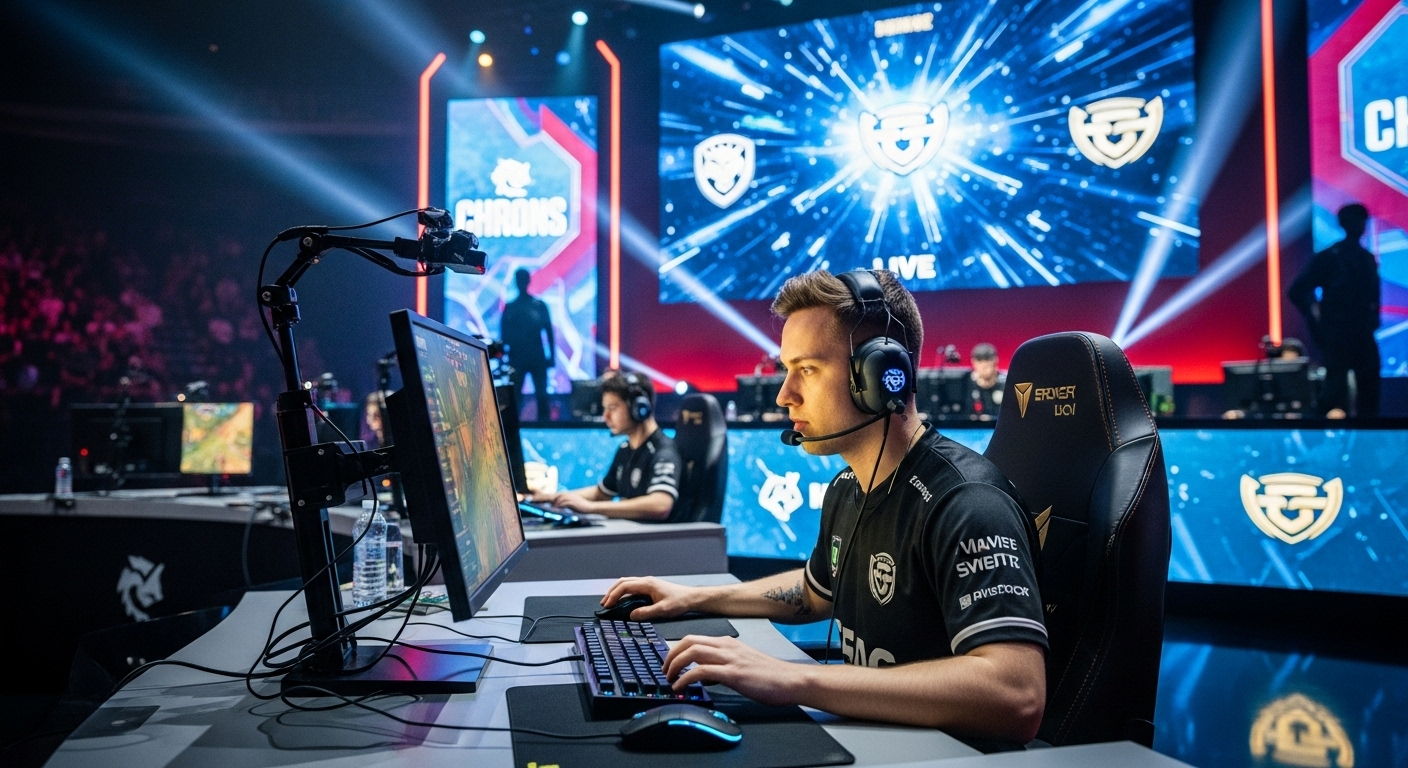
Over the past few decades, the world of gaming has evolved from a casual pastime into a global phenomenon known as esports. What began as small local tournaments among friends has now become a billion-dollar industry that fills stadiums, draws millions of viewers online, and creates professional athletes who compete at the highest level. Esports, short for electronic sports, represents the fusion of technology, entertainment, and competition. It has transcended the boundaries of traditional gaming to become one of the fastest-growing industries in the world. As the digital age continues to expand, esports stands as a symbol of how technology can reshape culture, economy, and the way we experience sports.
The Rise of Esports: From Arcades to Global Arenas
The journey of esports began humbly, in the 1970s and 1980s, when video games were still a novelty. Early competitions were organized in arcades, where players competed for high scores in games like Space Invaders and Pac-Man. These gatherings were small and informal, but they laid the groundwork for something much bigger. The introduction of personal computers and home gaming consoles in the 1990s revolutionized gaming by making it more accessible to the masses. Multiplayer games such as Quake, StarCraft, and Counter-Strike gave players the ability to compete with others globally.
As internet connectivity improved, online gaming communities began to flourish. Gamers could now face off against opponents across continents, and this global connectivity became the backbone of the esports movement. In the 2000s, competitive gaming took off, fueled by the rise of broadband internet, streaming platforms, and social media. Tournaments became larger, prizes grew more significant, and audiences expanded dramatically. Games like Dota, League of Legends, and Counter-Strike became household names in the esports world, setting the stage for professional teams and leagues that mirrored traditional sports organizations.
The Esports Ecosystem: Beyond Just Playing Games
Today, esports is not just about playing video games—it is a fully developed ecosystem involving players, coaches, analysts, commentators, sponsors, event organizers, and fans. Like any professional sport, it requires rigorous training, strategic planning, teamwork, and mental discipline. Esports athletes dedicate hours each day to refining their skills, studying their opponents, and perfecting their strategies.
Professional teams are structured much like football or basketball clubs, with managers, trainers, and support staff ensuring players maintain peak performance. Some organizations even employ psychologists and nutritionists to help players cope with the intense pressure of competition. Esports has also created new job opportunities in broadcasting, event management, marketing, and game development. Commentators, often referred to as casters, play a crucial role by narrating live matches, adding excitement and helping audiences understand complex strategies.
The audience aspect of esports cannot be overstated. Millions of fans watch tournaments online, often cheering for their favorite teams and players as passionately as fans of traditional sports. The popularity of streaming platforms and online broadcasts has made esports accessible to anyone with an internet connection, transforming gaming into a shared global experience.
Popular Esports Titles: The Games That Built the Industry
Several iconic games have played pivotal roles in shaping the esports landscape. Titles like League of Legends, Dota 2, Counter-Strike: Global Offensive, and Fortnite have become the cornerstones of competitive gaming. Each of these games has a unique format, community, and culture that contributes to the diversity of esports.
League of Legends, developed by Riot Games, is a multiplayer online battle arena (MOBA) game that has dominated the esports scene for over a decade. Its annual World Championship draws millions of viewers, making it one of the most-watched events in the world. Dota 2, another MOBA, is famous for its massive prize pools, with The International tournament offering tens of millions of dollars in rewards funded by player contributions. Counter-Strike: Global Offensive, a tactical first-person shooter, has been a staple of competitive gaming for over 20 years, known for its precision, teamwork, and strategic depth.
Other games, such as Fortnite, Valorant, Apex Legends, and Call of Duty, have also contributed to the growth of esports by attracting younger audiences and introducing new formats. Sports simulation games like FIFA and NBA 2K have created a bridge between traditional sports and esports, allowing fans of physical sports to engage in digital competitions that mirror real-world leagues.
The Business of Esports: A Billion-Dollar Industry
Esports has evolved into a global business powerhouse. In recent years, the industry has attracted sponsorships from major corporations, media rights deals, and significant investments from traditional sports teams and celebrities. Brands see esports as a gateway to younger, tech-savvy audiences who consume content differently than previous generations. Sponsorships, advertising, ticket sales, and merchandise are the main revenue streams driving the esports economy.
Tournaments and leagues are organized on a grand scale, with professional production quality that rivals major sporting events. Cities around the world host esports arenas, and universities have begun offering scholarships and degrees in esports management and game design. Moreover, streaming and content creation have become integral to the esports business model. Professional players and teams often engage with their audiences through live streams, behind-the-scenes content, and interactive fan events, strengthening community loyalty.
Investors have also recognized the potential of esports as a long-term growth sector. With viewership numbers surpassing those of some traditional sports, esports offers unparalleled opportunities for global reach. The integration of technology, media, and gaming has created an entertainment ecosystem that is constantly evolving.
The Impact of Esports on Society and Culture
Beyond entertainment and business, esports has made a significant cultural and social impact. It has given rise to a new generation of digital athletes who inspire millions of fans worldwide. Esports challenges traditional notions of sports by emphasizing mental agility, strategy, and coordination over physical prowess. This has made competitive gaming more inclusive, opening doors for people who may not fit the mold of conventional athletes but still possess exceptional skills.
Esports has also fostered global connectivity. Players from different countries and backgrounds come together to compete and collaborate, transcending language and cultural barriers. This global interaction has helped promote diversity and mutual understanding within the gaming community. Additionally, esports has become a platform for social causes. Many organizations and streamers use their platforms to raise funds for charity, support mental health awareness, and advocate for inclusivity in gaming.
However, as esports grows, it also faces challenges such as burnout, mental health issues, and toxicity within online communities. The intense pressure to perform and the competitive nature of gaming can take a toll on players’ well-being. Fortunately, organizations are becoming more aware of these challenges and are investing in player support systems to promote a healthier and more sustainable environment.
The Technological Backbone of Esports
Technology is at the heart of esports. High-performance computers, fast internet connections, and advanced gaming peripherals are essential for competitive play. Innovations in hardware, such as high-refresh-rate monitors, mechanical keyboards, and responsive gaming mice, have elevated the standard of competition.
Moreover, advancements in software and data analytics are transforming how players train and compete. Teams now use data-driven analysis to study gameplay, identify weaknesses, and optimize performance. Virtual reality and augmented reality technologies are also being explored to create more immersive and interactive esports experiences for both players and fans.
Streaming technology has played a vital role in esports’ growth. Platforms that allow real-time broadcasting have turned professional players into global celebrities, allowing fans to watch live matches and interact with their favorite gamers. These technologies have democratized entertainment, making esports accessible to anyone, anywhere.
The Future of Esports: What Lies Ahead
The future of esports looks brighter than ever. With continued technological advancements, increasing investment, and growing global interest, esports is poised to become one of the dominant forms of entertainment in the coming decades. We can expect greater integration with emerging technologies such as artificial intelligence, virtual reality, and blockchain, which will further enhance gameplay, security, and fan engagement.
Educational institutions are likely to play a greater role in the development of esports as a legitimate career path. More universities are introducing esports programs, providing opportunities for students to pursue careers not just as players but also as coaches, analysts, and managers. Governments in various countries are also recognizing esports as an official sport, offering support for infrastructure and regulation.
However, as esports continues to grow, it must also focus on sustainability and inclusivity. Ensuring fair competition, preventing cheating, and promoting diversity will be key to maintaining the integrity and longevity of the industry. The esports community must work together to create a positive environment that encourages both competition and collaboration.
Conclusion: The Dawn of a New Era
Esports has come a long way from its humble beginnings in arcades to becoming a global industry that rivals traditional sports in popularity and influence. It represents the convergence of technology, entertainment, and human ambition. As the digital world continues to expand, esports will remain at the forefront of innovation, driving cultural change and inspiring millions around the globe.
The digital arena is no longer a niche; it is a global stage where players, creators, and fans come together to celebrate the spirit of competition and creativity. The rise of esports is not just the story of gaming—it is the story of a generation redefining what it means to compete, connect, and win in a rapidly evolving world.