
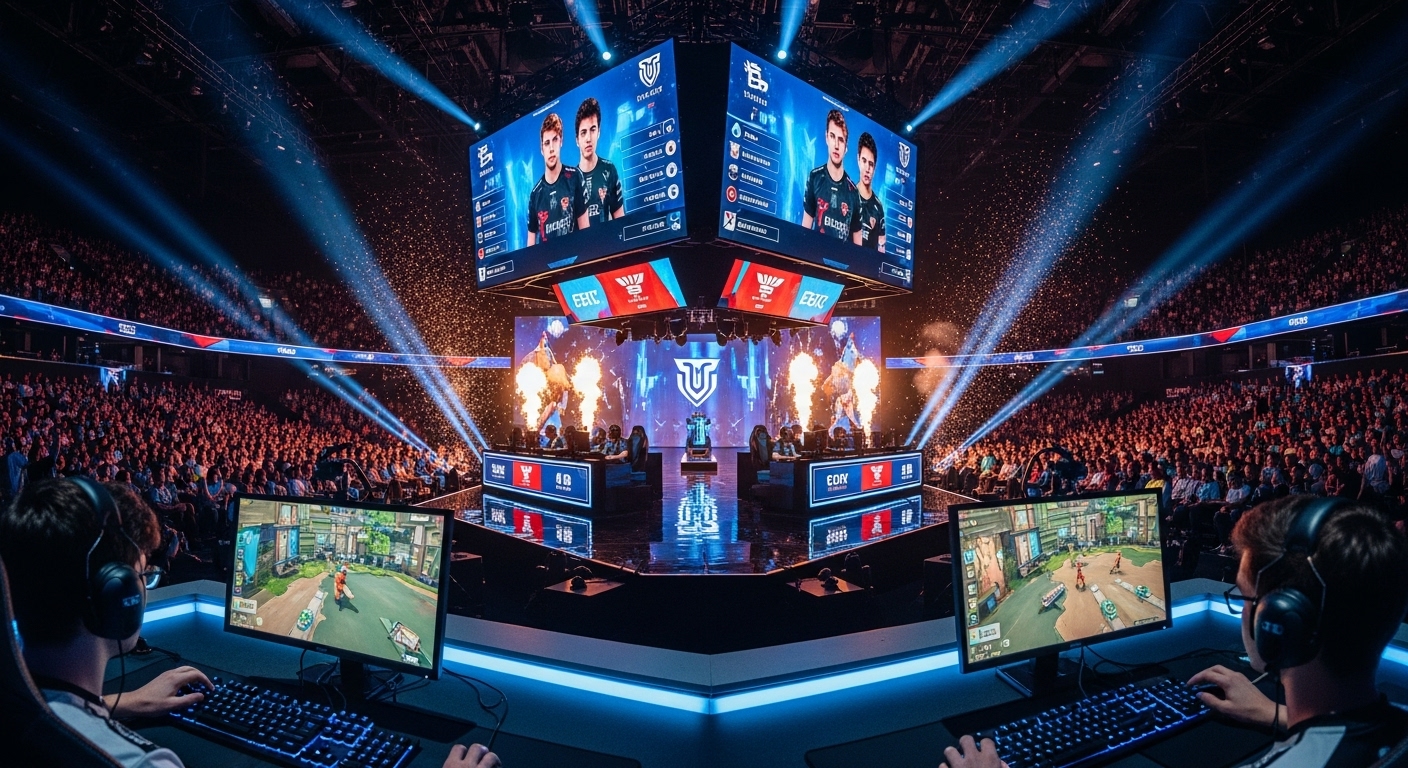
Esports, or electronic sports, has rapidly evolved from a niche pastime to a global entertainment phenomenon. It encompasses organized, multiplayer video game competitions, particularly between professional players, individually or as teams. In recent years, esports has exploded into the mainstream, attracting millions of viewers, substantial sponsorships, and massive prize pools. But how did esports grow to such prominence, and what makes it a truly unique form of entertainment?
The Origins of Esports
The origins of esports can be traced back to the early 1970s when video games began to find their place in public culture. While arcade games like Pong and Space Invaders became popular in gaming arcades, competitive gaming was still in its infancy. However, the first real taste of organized competition came in 1980 with the Space Invaders Championship, organized by Atari. Though it only attracted a small group of players, it laid the foundation for what would become a global phenomenon.
Esports truly began to take shape in the 1990s. Titles such as StarCraft and Quake brought a new level of skill and strategy to multiplayer gaming, and tournaments began to form around these games. By the late ’90s, major esports tournaments were held with impressive prize pools, but it was the dawn of the 2000s that witnessed the first significant steps toward the esports industry as we know it today.
Growth and Globalization
The real breakthrough for esports occurred with the rise of broadband internet in the early 2000s. As online gaming became more accessible, titles like Warcraft III, Counter-Strike, and Dota 2 took the gaming world by storm. Players were no longer confined to local LAN (Local Area Network) events; they could now compete with players from around the globe, creating a truly international competitive environment.
The Role of Streaming Platforms
Perhaps the most significant catalyst for esports’ meteoric rise in the past decade has been the advent of streaming platforms like Twitch, YouTube Gaming, and Facebook Gaming. These platforms provided a way for fans to watch live streams of esports tournaments and players in real-time. In turn, this attracted a massive audience that fueled the industry’s growth.
Streaming not only made esports more accessible to viewers, but it also enabled players to build personal brands and connect with their audience. Streamers like Ninja, Shroud, and Pokimane became household names, further blurring the line between competitive gaming and mainstream celebrity culture. Twitch, in particular, has been instrumental in creating a new type of entertainment where gamers can earn a living by sharing their gaming experiences.
Esports and Professionalism
As esports grew in popularity, it began to mirror traditional sports in terms of professionalism. Just like in conventional sports, players in esports began signing contracts with organizations, training in specialized teams, and competing in organized leagues. Major game publishers, such as Riot Games (League of Legends) and Valve (Dota 2), began investing in professional leagues and tournaments with substantial prize money.
At the same time, esports organizations emerged as the backbone of competitive gaming. Teams like Team Liquid, Fnatic, and Cloud9 established themselves as major brands within the industry, recruiting top-tier players and offering coaching, training facilities, and management services to ensure the players’ success. These teams also formed sponsorships with major companies, such as Intel, Red Bull, and Mercedes-Benz, marking esports as a serious business with significant financial stakes.
The level of professionalism in esports has also led to the emergence of esports commentators, analysts, coaches, and managers, adding another layer of structure and career opportunities in the field. These professionals ensure that the competitive integrity of esports events is maintained and that the viewing experience is engaging for fans.
The Esports Ecosystem: Tournaments, Leagues, and Prize Money
Esports today is defined by its structure—ranging from large international tournaments to grassroots community events. Some of the most popular esports titles include League of Legends, Counter-Strike: Global Offensive (CS:GO), Dota 2, Overwatch, and Fortnite. These games have their own dedicated fan bases and professional leagues that are broadcasted worldwide.
The prize pools for major esports tournaments have skyrocketed in recent years. For instance, the International Dota 2 Championship boasts a prize pool that regularly exceeds $30 million, thanks to crowdfunding from players and fans. League of Legends also has one of the biggest esports ecosystems, with regional leagues across the globe and a world championship that attracts millions of viewers.
However, the esports ecosystem is not just about high-level professional tournaments. Amateur and semi-professional competitions thrive, with countless smaller tournaments providing opportunities for up-and-coming players. These grassroots competitions are essential to the growth of esports, as they allow new talent to emerge and gain visibility.
The Cultural Impact of Esports
Esports has had a profound cultural impact, not only in gaming but also in mainstream society. With millions of fans tuning in to watch major tournaments, esports has entered the realm of traditional sports. In fact, games like League of Legends and Fortnite have been featured in mainstream media outlets, and major sports networks like ESPN have started broadcasting esports events.
Esports’ integration into the cultural mainstream is particularly evident in its appearance in major sporting events like the Asian Games, where esports was introduced as a medal event in 2022. This recognition is a testament to the growing legitimacy of esports as a competitive pursuit.
Moreover, esports has also helped to break down barriers between different cultures. Online gaming allows players from diverse backgrounds to interact, fostering global communities united by a common passion. In a sense, esports has become a digital melting pot, where fans from all walks of life come together to celebrate their favorite games and players.
The Future of Esports
Looking ahead, the future of esports appears incredibly bright. Industry experts predict continued growth in both viewership and revenue, with esports projected to surpass $1.5 billion in revenue by 2025. The expansion of mobile gaming, with titles like PUBG Mobile and Clash Royale, will likely introduce new audiences to competitive gaming, further expanding the global footprint of esports.
The increased adoption of virtual reality (VR) and augmented reality (AR) also holds exciting possibilities for esports. These technologies have the potential to create more immersive and interactive experiences for players and fans alike. Additionally, as the hardware required for competitive gaming becomes more advanced, players may enjoy even greater advantages in their pursuit of esports excellence.
With esports becoming more mainstream, traditional sports teams, celebrities, and even governments are showing increased interest. Partnerships between esports organizations and professional sports teams are becoming more common. In fact, several major sports organizations have already launched their own esports divisions or teams.
Challenges Faced by the Esports Industry
Despite its growth, esports is not without its challenges. One significant issue is player burnout. As the competition level intensifies, players are often required to practice for hours on end, leading to physical and mental exhaustion. Moreover, the pressure to perform at the highest level can take a toll on their well-being. As the industry matures, there is a growing recognition of the need to protect players’ health and mental state through proper support systems.
Another challenge facing esports is inclusivity. While the gaming community is broad, many esports tournaments remain predominantly male-dominated. There is a growing call for diversity and gender inclusion within the industry, encouraging more women to participate as players, coaches, and commentators.
Lastly, as the industry grows, it must contend with the risks of cheating and match-fixing, issues that have plagued traditional sports for decades. Ensuring the integrity of the competitions will be key to maintaining the trust of fans and sponsors alike.
Conclusion
Esports has come a long way since its early days as a niche hobby. Today, it stands as a global industry worth billions, drawing millions of viewers and participants. Esports is no longer just about playing video games—it has become a cultural phenomenon, blending entertainment, sports, and digital media into one cohesive experience.
As the industry continues to grow, it will face challenges, but the future of esports remains bright. The convergence of technology, entertainment, and competition will likely lead to even more exciting innovations in the years to come. For gamers, fans, and the esports industry as a whole, this is just the beginning of what promises to be an exhilarating journey.