
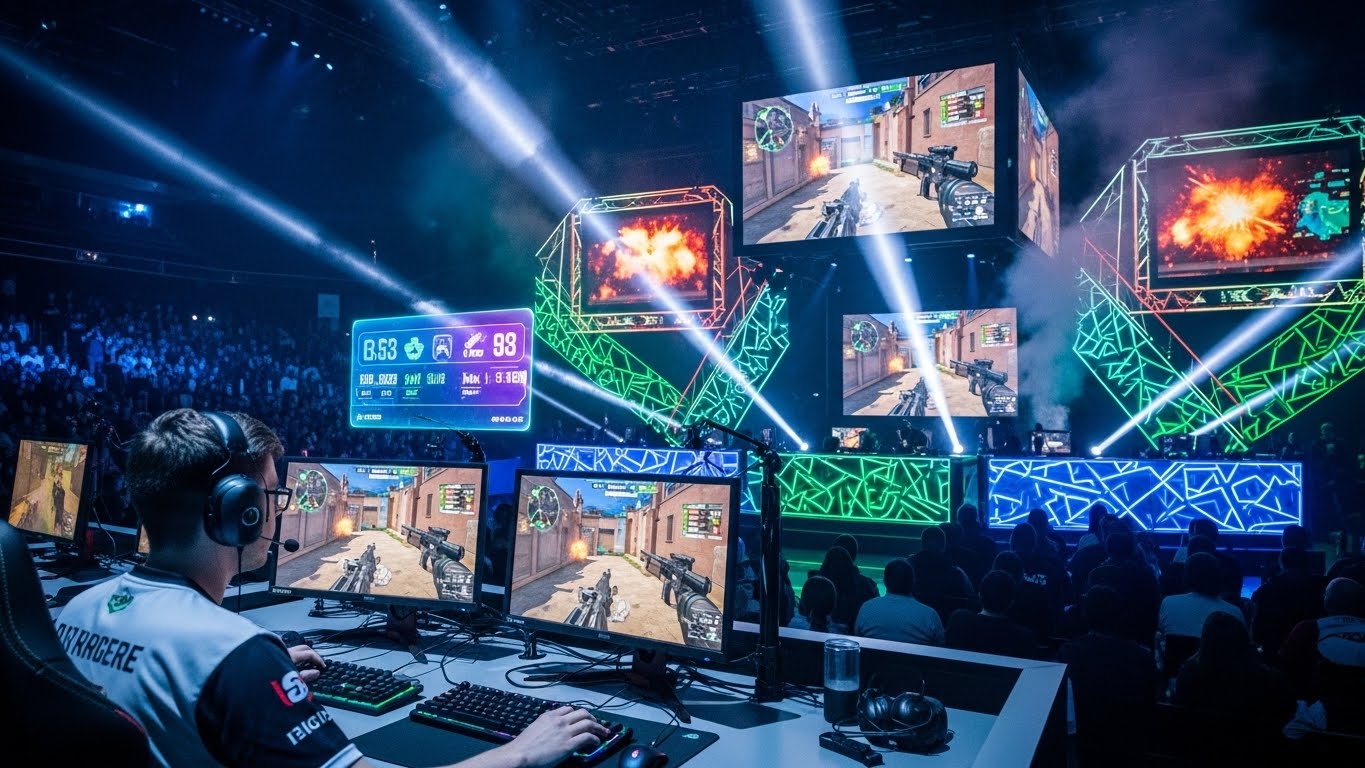
Esports, once considered a niche hobby for gamers, has rapidly evolved into a global phenomenon. What started as small, local tournaments in arcade halls and living rooms has expanded into a multi-billion-dollar industry. Today, esports is not just about playing video games; it’s a multifaceted entertainment sector, where millions of fans tune in to watch professional gamers compete at the highest level, teams sign multimillion-dollar sponsorships, and tournaments fill arenas. This blog delves into the rise of esports, exploring its origins, evolution, and what makes it a force to be reckoned with in modern entertainment.
The Origins of Esports: From Arcade to Online
To understand the meteoric rise of esports, it’s important to trace its roots back to the early days of gaming. In the 1970s and 1980s, the concept of competitive gaming was introduced through arcade machines and simple multiplayer games like “Pong” and “Space Invaders.” However, these early versions of competitive gaming were far from the global spectacle we know today. Tournaments were localized and relatively small-scale, typically organized by arcade owners or early game developers.
In the late 1990s, the internet became widely available, providing a more substantial platform for gamers to connect and compete globally. The introduction of multiplayer online games such as “Quake,” “StarCraft,” and “Warcraft” marked the beginning of a new era. These games allowed players from across the globe to battle in real-time, setting the stage for what would become the esports industry.
The first notable esports event, the Red Annihilation Tournament in 1997, is often cited as a pivotal moment in esports history. It was a “Quake” competition that attracted a large number of players and was broadcasted online, showcasing the potential of competitive gaming as both a spectator and participatory sport.
The Evolution of Esports: From Niche to Mainstream
Throughout the early 2000s, esports continued to grow, albeit at a slow pace. The emergence of gaming franchises such as “League of Legends,” “Counter-Strike,” and “Dota 2” played a critical role in building the foundation of the modern esports landscape. These games became the cornerstone of competitive gaming, attracting both players and viewers in droves. Streaming platforms like Twitch, which was founded in 2011, were instrumental in this shift. Twitch provided a dedicated space for gamers to broadcast their gameplay live, bringing the excitement of esports directly to fans’ screens.
One of the key factors in the growth of esports was the advent of large-scale, professionally organized tournaments. In 2011, Riot Games launched the League of Legends World Championship, which quickly became one of the biggest esports events globally. The tournament’s success demonstrated that esports could rival traditional sports in terms of viewership and engagement. The introduction of similar events for other popular games, such as “The International” for Dota 2, helped further solidify esports as a mainstream form of entertainment.
As esports gained traction, major companies, including tech giants like Intel and Red Bull, began to sponsor events and teams, injecting massive amounts of money into the ecosystem. Prize pools for tournaments grew exponentially, with some competitions offering millions of dollars in rewards. For instance, The International 2018 Dota 2 championship had a prize pool exceeding $25 million, making it one of the most lucrative esports events ever.
The Globalization of Esports: Cultural Impact and Mass Appeal
One of the most fascinating aspects of esports’ rise is its ability to transcend geographical and cultural barriers. Unlike traditional sports, where physical proximity and infrastructure are often a determining factor in participation, esports only requires an internet connection. This has allowed players from all over the world to compete, and it has made esports an international phenomenon.
Esports has grown especially popular in Asia, particularly in countries like South Korea, China, and Japan. In South Korea, competitive gaming is a well-established industry, and professional gamers are treated like celebrities. The Korean esports scene gained worldwide recognition in the early 2000s with the rise of “StarCraft” and “Warcraft III,” and the country’s esports ecosystem has since evolved into a sophisticated and highly organized structure.
Meanwhile, China has become one of the largest esports markets in the world. The Chinese government has supported esports by recognizing it as a legitimate career path, and the country is home to some of the most well-established esports organizations and players.
In the West, esports began to pick up steam around the mid-2010s, as more viewers started tuning in to watch games like “League of Legends” and “Fortnite.” Major sports networks like ESPN began broadcasting esports events, and even traditional sports teams started investing in esports. In 2018, the NBA’s Philadelphia 76ers acquired two esports teams, marking one of the first major professional sports teams to enter the world of gaming.
The Professionalization of Esports: Teams, Salaries, and Sponsorships
Esports has undergone a massive professionalization over the past decade. What was once a hobby for passionate gamers has now become a career for many. Professional esports players are highly skilled athletes who train for hours each day, working on strategy, reflexes, and communication skills. These players compete for prize money, sponsorship deals, and, in some cases, salaries paid by esports organizations.
As esports teams have become more established, they’ve adopted organizational structures similar to those in traditional sports. Teams are comprised of players who specialize in specific roles within a game, and they work closely with coaches, analysts, and support staff to optimize their performance. Just like in football or basketball, esports players are often recruited, traded, and signed to contracts that ensure their loyalty to a particular organization.
The financial aspect of esports is another key component of its rise. In addition to prize money, esports players often secure endorsement deals with major brands. Companies like Samsung, Nike, and Coca-Cola have all partnered with esports teams and players, recognizing the immense marketing potential of the gaming world. These partnerships are lucrative and have enabled many players to earn six-figure salaries. Top players, such as those from teams like Team Liquid and T1, can earn millions of dollars annually through tournament winnings, sponsorships, and streaming revenue.
The Esports Audience: A New Generation of Fans
Esports has cultivated a unique fan base that differs from traditional sports fans. The typical esports audience is younger, tech-savvy, and more global in nature. In fact, research shows that the average esports viewer is between the ages of 18 and 34, a demographic that many advertisers find highly attractive. This younger audience is not just passive spectators; they are active participants in the esports ecosystem, whether through online communities, fan forums, or even amateur competitions.
Platforms like Twitch, YouTube Gaming, and Facebook Gaming have allowed fans to engage with their favorite players and teams in real-time. Esports viewers are not just watching a game; they are interacting with the content, offering real-time commentary, and participating in discussions. This level of engagement sets esports apart from traditional sports, where fan interaction is often limited to social media.
Furthermore, esports events have become a social experience for viewers. Many fans attend live events, such as the League of Legends World Championship, to witness the competition firsthand. These events are often accompanied by concerts, meet-and-greets, and other fan activities, creating a festival-like atmosphere.
The Future of Esports: A Global Industry on the Rise
The future of esports looks incredibly bright, with the industry continuing to expand rapidly. It is expected that the global esports market will exceed $3 billion by 2025, driven by increased sponsorship deals, media rights, and growing interest from non-endemic brands. With more and more traditional sports teams investing in esports, the lines between esports and traditional sports are becoming increasingly blurred.
The integration of esports into mainstream entertainment is already happening. In 2022, the Asian Games officially included esports as a medal event, signaling the increasing acceptance of esports in the world of competitive sports. Moreover, with the rise of virtual reality (VR) and augmented reality (AR), esports could soon incorporate new dimensions of interactivity, offering fans and players a more immersive experience.
Another trend to watch is the growth of mobile esports. With mobile gaming’s meteoric rise, titles like “PUBG Mobile,” “Clash Royale,” and “Free Fire” have attracted huge audiences. These mobile games, coupled with the widespread use of smartphones, will play a significant role in the democratization of esports, enabling more people to participate in and watch competitions from their mobile devices.
Conclusion
Esports has come a long way from its humble beginnings in arcades and dorm rooms. It has grown into a global, multi-billion-dollar industry, driven by passionate fans, professional players, and major corporate investments. As esports continues to evolve, it will undoubtedly shape the future of entertainment, offering new ways for people to connect, compete, and enjoy gaming. Whether you’re a die-hard fan or a casual viewer, there’s no denying that esports has secured its place as one of the most exciting and dynamic forms of entertainment today. The best is yet to come.