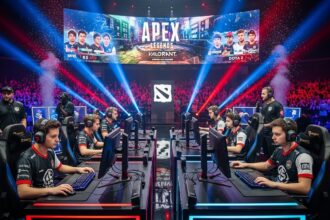

In the past decade, eSports has gone from a niche hobby to a worldwide entertainment powerhouse. Competitive gaming, which once took place in the basements of enthusiasts, has grown into a professional sport with massive global tournaments, sponsorships from major corporations, and a dedicated fanbase numbering in the millions. This transformation has changed the way we think about sports, entertainment, and even the future of gaming. In this post, we’ll explore the rise of eSports, how it’s reshaping entertainment, and what makes it a unique and compelling phenomenon.
The Birth of eSports: From Casual Games to Organized Competitions
eSports traces its origins back to the early days of multiplayer gaming. Games like Doom, StarCraft, and Quake played a significant role in laying the foundation for competitive gaming. These titles introduced players to the concept of head-to-head online competition, and small-scale tournaments began popping up in local LAN (local area network) settings. Gamers would gather at cafes or homes, playing against each other, and often organizing informal competitions for fun.
However, it wasn’t until the late 1990s and early 2000s that the competitive gaming scene started taking shape. The release of StarCraft in 1998 in South Korea marked a significant moment in eSports history. The game’s deep strategic elements and online multiplayer mode made it a prime candidate for organized tournaments, and soon professional eSports teams emerged. South Korea, in particular, became a hotbed for competitive gaming, with StarCraft competitions being broadcast on national television, drawing millions of viewers.
As the internet expanded globally and platforms like Twitch and YouTube began to grow in the 2010s, competitive gaming reached new heights. eSports tournaments were streamed live, allowing anyone with an internet connection to watch the action unfold. The rest, as they say, is history—eSports exploded into a billion-dollar industry that has only continued to grow.
The Appeal of eSports: What Makes Competitive Gaming So Compelling?
There’s no denying that eSports has a unique appeal. While traditional sports rely on physical skills and athleticism, eSports is based on mental agility, strategy, and fast reflexes. It’s about outsmarting and outplaying opponents in real-time. Whether it’s the tactical depth of League of Legends, the precision shooting of Counter-Strike, or the high-stakes battle royale style of Fortnite, each game offers a distinct challenge that requires players to master mechanics, strategies, and teamwork.
What makes eSports particularly compelling is its accessibility. Unlike traditional sports, where participants often need years of physical training and specific facilities, anyone with a gaming console or PC and an internet connection can get started. This has democratized competitive gaming, allowing players from all over the world to compete, no matter their background or location.
Additionally, eSports offers a level of entertainment that’s both immersive and interactive. Fans can watch matches live, participate in online discussions, and even cheer for their favorite players and teams. The ability to engage with content through streams, chat, and social media helps create a sense of community that sets eSports apart from traditional sports viewing experiences.
The Professionalization of eSports: A Career Path in Gaming
The rapid growth of eSports has led to its professionalization, transforming competitive gaming from a hobby to a full-fledged career. Professional eSports players are now able to earn a living—often quite lucratively—by competing in tournaments and streaming their gameplay online.
Teams are managed like traditional sports organizations, complete with coaches, analysts, and sponsorship deals. Top-tier players often sign contracts, get training in team dynamics, and undergo intense practice regimens. eSports is no longer just a casual pursuit; it’s a profession that requires dedication, skill, and a deep understanding of the game.
In addition to professional players, the eSports industry also includes coaches, content creators, analysts, and tournament organizers. These roles create a broad ecosystem of careers surrounding eSports. Broadcasting and production teams are required to deliver high-quality streams, commentators provide real-time analysis, and marketers work to grow the brands associated with eSports teams and events.
Perhaps one of the most exciting developments is the rise of eSports scholarships. Many universities and colleges now offer scholarships for talented gamers, allowing them to pursue higher education while competing at the highest levels of eSports. This has opened the door for younger generations to see gaming as a viable career path, just like other traditional sports.
Major eSports Tournaments: The Global Stage for Competitive Gaming
One of the defining features of eSports is its massive tournaments, which are now considered some of the most prestigious and lucrative events in the entertainment world. These tournaments bring together the world’s best players and teams to compete for large prize pools, sometimes reaching tens of millions of dollars. The International, League of Legends World Championship, and Overwatch League are just a few of the iconic events that attract millions of viewers worldwide.
The International (TI) is perhaps the most well-known of these events, with its annual prize pool regularly surpassing $30 million. This incredible sum is partially funded by the community, through in-game purchases and crowdfunding, which has transformed TI into one of the most financially successful tournaments in all of sports.
What sets eSports tournaments apart is their accessibility and reach. While traditional sports often require fans to travel to a specific location to watch games live, eSports events are almost always streamed online, allowing millions of viewers to tune in from anywhere in the world. The ability to watch events from home, coupled with live commentary, social media interactions, and virtual engagement, creates a dynamic and immersive experience for fans.
For players, participating in these tournaments means battling not just for the prize money but for recognition and fame. The best eSports athletes often become celebrities in their own right, with sponsorships, endorsement deals, and personal brands that rival those of traditional sports stars.
Sponsorships, Revenue, and the Business of eSports
As eSports continues to grow, it has become an increasingly lucrative business. Major brands from a wide variety of industries are investing heavily in eSports, seeing it as an effective way to engage with a young, tech-savvy audience. Companies like Coca-Cola, Intel, Red Bull, and Audi have all sponsored eSports teams and events, helping to elevate the status of competitive gaming to that of a mainstream sport.
Revenue in the eSports industry comes from multiple sources, including advertising, ticket sales to live events, merchandise, broadcasting rights, and sponsorships. Streaming platforms like Twitch and YouTube Gaming also generate significant revenue through ad sales, subscriptions, and donations from fans. Crowdfunding has become a significant part of some tournaments, with the community contributing to prize pools and helping to fund events.
The financial success of eSports is evident in the ever-growing prize pools at tournaments. What started as small prizes for local competitions has now evolved into multi-million dollar payouts for winners of major international events. The introduction of streaming revenue, sponsorship deals, and broadcasting rights has made eSports a sustainable and profitable industry.
eSports and Its Impact on Culture
Beyond the world of gaming itself, eSports is influencing broader cultural trends. From fashion to music, eSports athletes and teams are becoming style icons, and gaming-related music and merchandise are increasingly popular. The way eSports has integrated with mainstream entertainment has made it an undeniable cultural force, particularly for younger generations.
Moreover, eSports is challenging traditional notions of gender, race, and inclusion. With more women and underrepresented groups entering competitive gaming, eSports has created a space that welcomes diversity. Various initiatives aim to ensure that all players, regardless of background, feel supported and empowered to pursue their passions in the gaming world.
The Future of eSports: Where Is It Headed?
The future of eSports is incredibly bright. With increasing investments from major tech companies, the continued growth of global gaming communities, and the possibility of even larger international tournaments, eSports is on track to become an even more dominant force in entertainment. One of the most exciting developments on the horizon is the potential inclusion of eSports in the Olympics, signaling recognition from the broader sports world.
Additionally, technological advancements such as virtual reality (VR), augmented reality (AR), and 5G networks will likely change the way eSports is experienced. We could soon see a more immersive gaming experience, where players and viewers interact with the game world in ways never imagined before.
With more opportunities for players, coaches, and fans alike, the future of eSports holds endless possibilities. Whether you’re a casual gamer or a dedicated pro, eSports has solidified its place as a major player in the entertainment industry.
Conclusion: eSports as the New Frontier of Entertainment
eSports has come a long way from its humble beginnings in small LAN tournaments. Today, it stands as a global industry, offering career opportunities, entertainment, and a sense of community to millions. As technology evolves and the audience continues to grow, eSports is set to remain at the forefront of the digital entertainment revolution.
Whether you’re a player, a fan, or an investor, the world of eSports offers a world of excitement and opportunity. The future of competitive gaming is here, and it’s ready for the world to experience.