
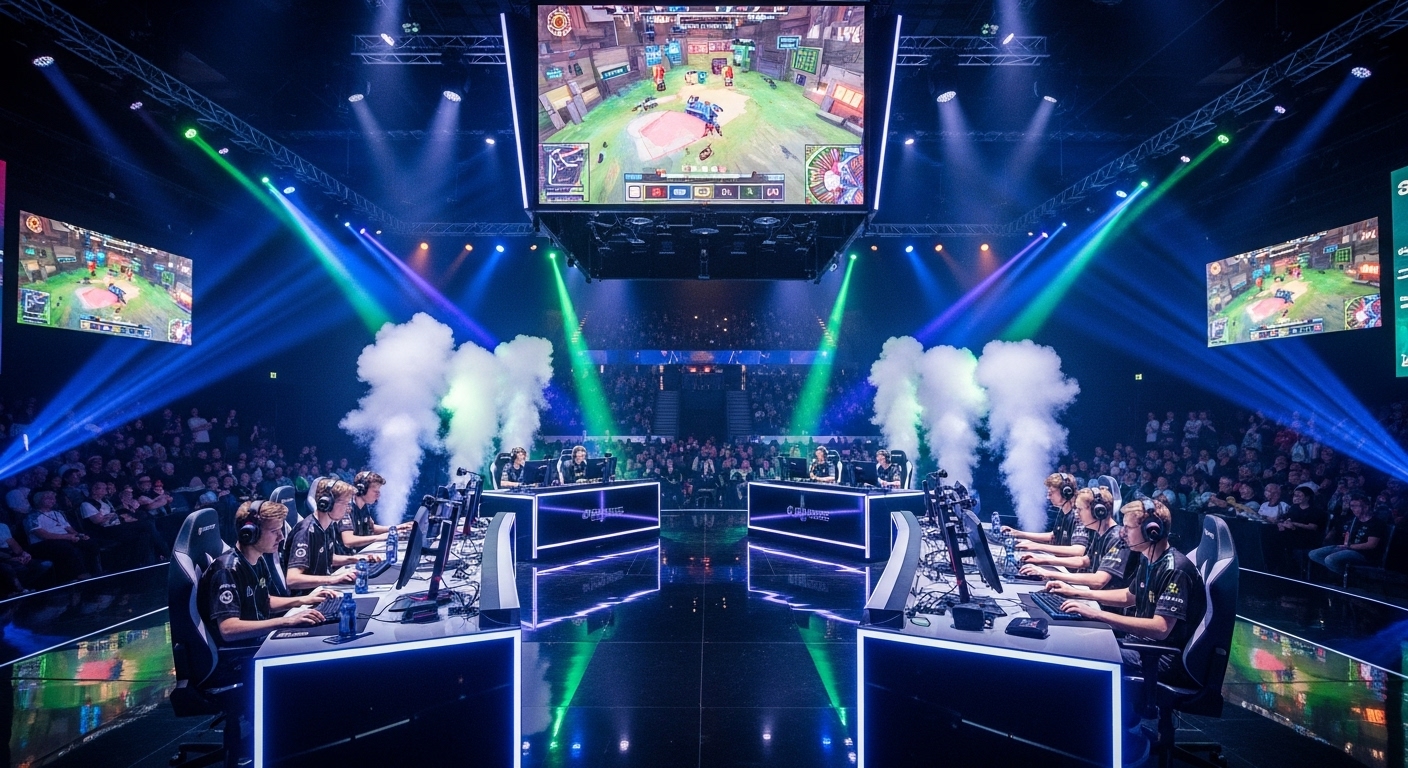
Esports has evolved from a niche hobby to a global powerhouse in entertainment. What once started as friendly competitions between gamers has exploded into a multi-billion-dollar industry, attracting millions of players, fans, and even sponsors. Today, esports isn’t just about playing video games — it’s a massive cultural movement that has shaped the way we view gaming, competition, and entertainment. In this blog post, we’ll explore the rise of esports, its impact on traditional sports, and what the future holds for this exciting new realm of competition.
The Origins and Growth of Esports
The history of esports dates back several decades. In the early days, competitive gaming was confined to small-scale tournaments and local LAN (Local Area Network) events. The 1990s and early 2000s saw the emergence of competitive games like StarCraft and Quake, which attracted dedicated players and a growing fanbase. However, it wasn’t until the mid-2000s that esports started to gain mainstream attention, with major tournaments like the World Cyber Games and The International (a premier Dota 2 competition) marking milestones in the industry’s development.
The real turning point came with the rise of streaming platforms like Twitch, which gave players and fans the ability to watch live gaming events, interact with streamers, and become part of a global community. This accessibility helped esports grow exponentially, with professional leagues and teams emerging across a wide range of popular games, including League of Legends, Counter-Strike: Global Offensive, and Overwatch. What was once a niche activity became a global spectacle.
Esports as a Professional Career Path
One of the most significant changes in the esports landscape is the transformation of gaming from a casual hobby to a viable professional career. Top-tier esports players can now make significant incomes, not only from tournament winnings but also through sponsorships, streaming, content creation, and merchandise sales.
In fact, esports is now one of the most lucrative fields for young gamers, with some players earning millions of dollars annually. The best-known esports athletes often enjoy celebrity status, similar to that of traditional sports stars, thanks to their global fanbases and brand partnerships. This shift has made competitive gaming an appealing career path for many aspiring players, and esports organizations have grown into multi-million dollar businesses, offering salaries, benefits, and career development for players and staff alike.
Esports and Traditional Sports: A New Kind of Competition
The rise of esports has sparked an interesting conversation about the intersection of gaming and traditional sports. Some skeptics argue that esports can’t truly be considered a “sport” due to its reliance on computers and technology, while others point out that the strategic thinking, teamwork, and skill required in competitive gaming are no different from those in traditional sports.
What’s undeniable is the growing crossover between esports and traditional sports. Major sports franchises and networks have begun investing in esports teams and events, with basketball teams like the NBA’s Philadelphia 76ers acquiring esports organizations and sports networks like ESPN broadcasting esports tournaments. This convergence highlights a broader cultural acceptance of esports as a legitimate form of competition that attracts a diverse, global audience.
In many ways, esports mirrors traditional sports, especially in terms of its competitive structure. Just like major football leagues, esports has professional leagues, minor leagues, collegiate competitions, and amateur tournaments. The development of player training academies, team sponsorships, and fan engagement also follows similar patterns to those seen in traditional sports.
The Esports Audience: A Global Community
One of the most compelling aspects of esports is its global reach. Unlike traditional sports, which often have region-specific fanbases, esports transcends geographic boundaries. A League of Legends tournament in South Korea can attract fans from all over the world, while a Fortnite competition held in the United States can be watched by millions across Europe, Asia, and beyond.
The demographic of esports fans is also unique. While traditional sports tend to have an older, more established fanbase, esports attracts a younger, tech-savvy audience that has grown up with gaming as part of their daily lives. Esports enthusiasts are not just passive viewers; they engage with the content, interact with players through social media, and even participate in the community by streaming their own gaming experiences.
This global and interactive fanbase has become a powerful force in esports, driving demand for live events, merchandise, and content. Major tournaments now fill arenas and stadiums, while digital streaming platforms attract millions of concurrent viewers. Esports events are not only about watching games; they are social experiences where fans come together to celebrate their favorite teams and players.
The Future of Esports: Innovation and Expansion
As esports continues to grow, it’s clear that the future of competitive gaming will be marked by continued innovation and expansion. One of the most exciting developments is the integration of new technologies like virtual reality (VR) and augmented reality (AR). These technologies have the potential to create fully immersive esports experiences, where players and fans can experience games in entirely new ways.
Moreover, as the esports industry matures, we can expect to see even more significant investments from major companies. Gaming giants like Blizzard, Riot Games, and Epic Games are constantly improving their esports infrastructure, while companies in unrelated industries — such as automotive and technology — are jumping on the esports bandwagon to tap into its lucrative market.
The rise of esports will also have broader implications for education and career opportunities. Colleges and universities around the world are now offering scholarships and degree programs in esports management, game development, and other related fields. As esports becomes more embedded in the educational system, it will create a new generation of skilled professionals who will contribute to the industry’s growth and innovation.
Conclusion: Esports Is Here to Stay
Esports is no longer just a passing trend; it’s a multi-faceted global industry that continues to evolve at an astonishing pace. From its humble beginnings as a niche hobby to its status as a global entertainment powerhouse, esports has reshaped how we think about competition, gaming, and entertainment.
With professional players earning millions, fans filling arenas, and major sports organizations investing in esports, it’s clear that competitive gaming is a permanent fixture in the world of entertainment. As technology, culture, and business continue to evolve, esports will remain at the forefront of this new digital age, bringing people together through the universal language of gaming. Whether you’re a player, a fan, or simply an observer, it’s an exciting time to be part of the esports revolution.