
Introduction
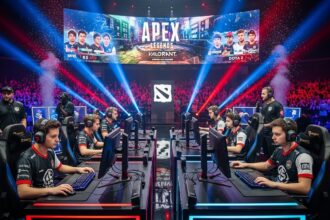
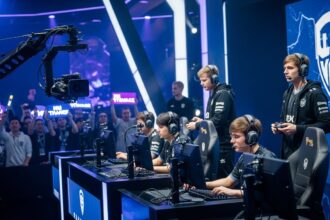
In the past two decades, one of the most fascinating cultural shifts in the world of entertainment and competition has been the emergence of esports. What was once dismissed as a casual pastime has transformed into a billion-dollar global industry that rivals traditional sports in viewership, sponsorships, and influence. Esports, short for electronic sports, refers to organized competitive gaming where professional players and teams compete in video games for prestige, recognition, and large sums of money. From humble beginnings in small gaming arcades to massive international tournaments watched by millions online and in packed stadiums, the journey of esports is one of innovation, passion, and technological evolution.
The Early Days of Competitive Gaming
To truly understand the scale of modern esports, it is important to look back at its origins. The concept of competitive gaming can be traced to the early 1970s when video games first gained popularity in arcades and universities. One of the earliest recorded gaming competitions took place at Stanford University in 1972, where players competed in the game Spacewar!. The prize was modest—a year’s subscription to a magazine—but it marked the birth of competitive video gaming.
In the 1980s, arcade games like Pac-Man, Donkey Kong, and Space Invaders drew large crowds of players who competed for the highest scores. This era established the culture of gaming as a competitive pursuit. Gaming magazines began publishing leaderboards, and local competitions became community events. However, these early tournaments lacked structure and global reach, as the internet had yet to revolutionize the industry.
The Birth of Online Competition
The 1990s were a turning point for competitive gaming. As personal computers and home consoles became more advanced, the internet began connecting players worldwide. Multiplayer online games such as Doom, Quake, and StarCraft gave rise to online communities and competitive ladders. Players were no longer limited to local competitions; they could now challenge opponents from across the globe.
This period also saw the emergence of the first organized esports leagues and tournaments. The Cyberathlete Professional League (CPL), founded in 1997, was one of the pioneers in creating structured competitions with prize pools and sponsorships. Similarly, South Korea became a global hub for competitive gaming, particularly with the popularity of StarCraft. The South Korean government and media embraced esports, broadcasting tournaments on television and nurturing professional players who became national celebrities.
The Global Expansion of Esports
As technology advanced, so did the sophistication and popularity of esports. The 2000s witnessed a dramatic rise in the scale of competitions, viewership, and investment. Broadband internet made online play smoother and more accessible, while the growing gaming community created a demand for organized competitions.
Games like Counter-Strike, Dota, League of Legends, and Call of Duty became cornerstones of competitive gaming. Professional teams began forming, and gaming organizations started managing players, coaches, and sponsors just like traditional sports teams. With the rise of platforms such as Twitch and YouTube, esports found its perfect medium for broadcasting. Unlike traditional television, these platforms offered interactivity and community engagement, allowing fans to chat and support their favorite players in real time.
By the late 2000s, major tournaments such as The International for Dota 2 and League of Legends World Championship were offering multi-million-dollar prize pools. Esports was no longer a niche hobby; it had become a legitimate form of entertainment and a professional career path for many.
The Structure and Organization of Esports
Modern esports mirrors traditional sports in many ways. There are professional teams, leagues, coaches, analysts, and even sports psychologists who help players perform at their best. Games are selected as esports titles based on their competitiveness, balance, and spectator appeal.
Each game has its own unique ecosystem. For instance, League of Legends has regional leagues culminating in a global championship, while Counter-Strike 2 operates on an open tournament system with independent organizers. The players undergo rigorous training schedules, practicing for hours daily to master strategies, teamwork, and reflexes.
Sponsorships and branding have also become central to esports. Major companies from various industries—tech, energy drinks, automobiles, and fashion—now invest heavily in teams and tournaments. This influx of sponsorship money has further professionalized the scene, allowing teams to offer salaries, housing, and benefits to players.
The Cultural Impact of Esports
Beyond competition, esports has had a significant cultural influence. It has reshaped the perception of gaming, transforming it from a solitary activity into a globally recognized sport. The rise of gaming influencers, streamers, and professional players has created new types of celebrities. Esports athletes like Faker, s1mple, and Ninja are now household names with millions of fans worldwide.
Moreover, esports has played a crucial role in bridging cultural gaps. It brings together players and fans from different countries, languages, and backgrounds. In international tournaments, fans from around the world unite to support their favorite teams, much like the Olympics or the FIFA World Cup. This global community fosters mutual respect and cultural exchange.
Esports and Technology
The growth of esports has been inseparable from technological progress. High-speed internet, powerful gaming PCs, and advanced streaming technology have made it possible for millions to participate and spectate seamlessly. Virtual reality (VR) and augmented reality (AR) are also beginning to influence how esports is played and experienced.
Artificial intelligence and data analytics are increasingly used by teams to study opponents and improve strategies. Just as traditional sports use statistics and analysis to gain a competitive edge, esports teams employ software to review gameplay, measure reaction times, and evaluate team coordination.
Cloud gaming and 5G technology promise to make esports even more accessible. With faster connections and minimal latency, players can compete from anywhere without needing expensive hardware. This democratization of gaming could expand the talent pool and make esports more inclusive than ever before.
Education and Career Opportunities in Esports
As esports continues to grow, educational institutions have begun to recognize its potential. Universities around the world now offer scholarships for esports players, as well as degrees in game design, esports management, and digital marketing. This formal recognition has legitimized esports as a viable career path beyond just being a player.
Careers in esports extend to multiple disciplines. There are opportunities in coaching, event management, broadcasting, marketing, and journalism. The industry also requires technical experts, such as game developers, analysts, and IT professionals, to support tournaments and platforms.
In addition, esports is promoting STEM (Science, Technology, Engineering, and Mathematics) education among youth. The skills developed through gaming—critical thinking, teamwork, communication, and strategic planning—are transferable to many real-world careers.
Esports and Traditional Sports: A New Rivalry
One of the most fascinating developments in the 21st century is the relationship between esports and traditional sports. While they may seem vastly different, they share many similarities. Both require skill, discipline, teamwork, and mental fortitude. Many traditional sports organizations have recognized the potential of esports and have started investing in it.
Professional teams from the NBA, NFL, and European football leagues have launched their own esports divisions. Events like the FIFA eWorld Cup and NBA 2K League blend the worlds of gaming and real sports, attracting fans from both sides. Interestingly, esports has also influenced how traditional sports are broadcast and marketed, with interactive elements and online fan engagement becoming more common.
However, debates still arise about whether esports should be considered a “real sport.” Critics argue that it lacks physical exertion, while supporters point to its intense mental demands and the complexity of competitive play. Regardless of the argument, the inclusion of esports as a potential medal event in international competitions like the Asian Games shows that it is gaining official recognition as a legitimate sport.
The Economic Power of Esports
Esports is no longer just a subculture; it is a thriving global economy. The industry generates billions annually through sponsorships, advertising, merchandise, and media rights. Major tournaments attract millions of viewers, rivaling traditional sporting events. For example, viewership numbers for global esports finals often surpass those of events like the Super Bowl or the NBA Finals.
Cities and governments have also started investing in esports infrastructure, building arenas and hosting international competitions to boost tourism and local economies. Countries like South Korea, China, and the United States have become major centers for esports development, nurturing local talent and attracting global investment.
Challenges Facing the Esports Industry
Despite its success, esports faces several challenges. One major issue is sustainability. The industry’s rapid growth has led to oversaturation, with too many tournaments and not enough consistent fan engagement for every title. Some organizations struggle to maintain profitability due to high operational costs and inconsistent revenue streams.
Another concern is player burnout. Professional gamers often start their careers at a young age and face intense pressure to perform. Long hours of training can lead to physical and mental health issues. Unlike traditional athletes, esports players have relatively short careers, with many retiring in their mid-twenties.
Toxicity and cheating are also persistent problems. Online communities can sometimes foster negative behavior, and the anonymity of the internet can lead to harassment. Developers and tournament organizers must constantly update systems to prevent cheating and maintain fair competition.
The Future of Esports
The future of esports looks bright, with continued innovation and global expansion. As technology evolves, so will the ways in which people play and watch competitive games. Virtual reality, cloud gaming, and artificial intelligence could revolutionize how matches are conducted and experienced.
Esports is also expected to become more inclusive, with efforts to promote diversity among players, commentators, and fans. The participation of women in esports is growing, and more organizations are working to create safe and supportive environments for everyone.
Moreover, as younger generations grow up in the digital age, esports will continue to be a central part of entertainment culture. The integration of gaming into education, media, and business will further cement its role in society.
Conclusion
Esports has come a long way from its humble beginnings in university labs and local arcades to becoming a global phenomenon. It embodies the spirit of modern innovation—blending technology, creativity, and human competition. What makes esports truly unique is its ability to unite people across borders through a shared passion for gaming.
The digital revolution that fueled its growth continues to shape how people interact, compete, and entertain themselves. With its ever-expanding influence on culture, economy, and technology, esports stands as one of the most remarkable success stories of the modern era. It represents not just the future of competition but also a new way of understanding community, achievement, and entertainment in the digital age.
In the years to come, as technology evolves and new generations of players emerge, esports will continue to redefine what it means to be an athlete and what it means to compete. The world is only beginning to grasp the full potential of this digital frontier, and the journey ahead promises to be as thrilling as the games themselves.