
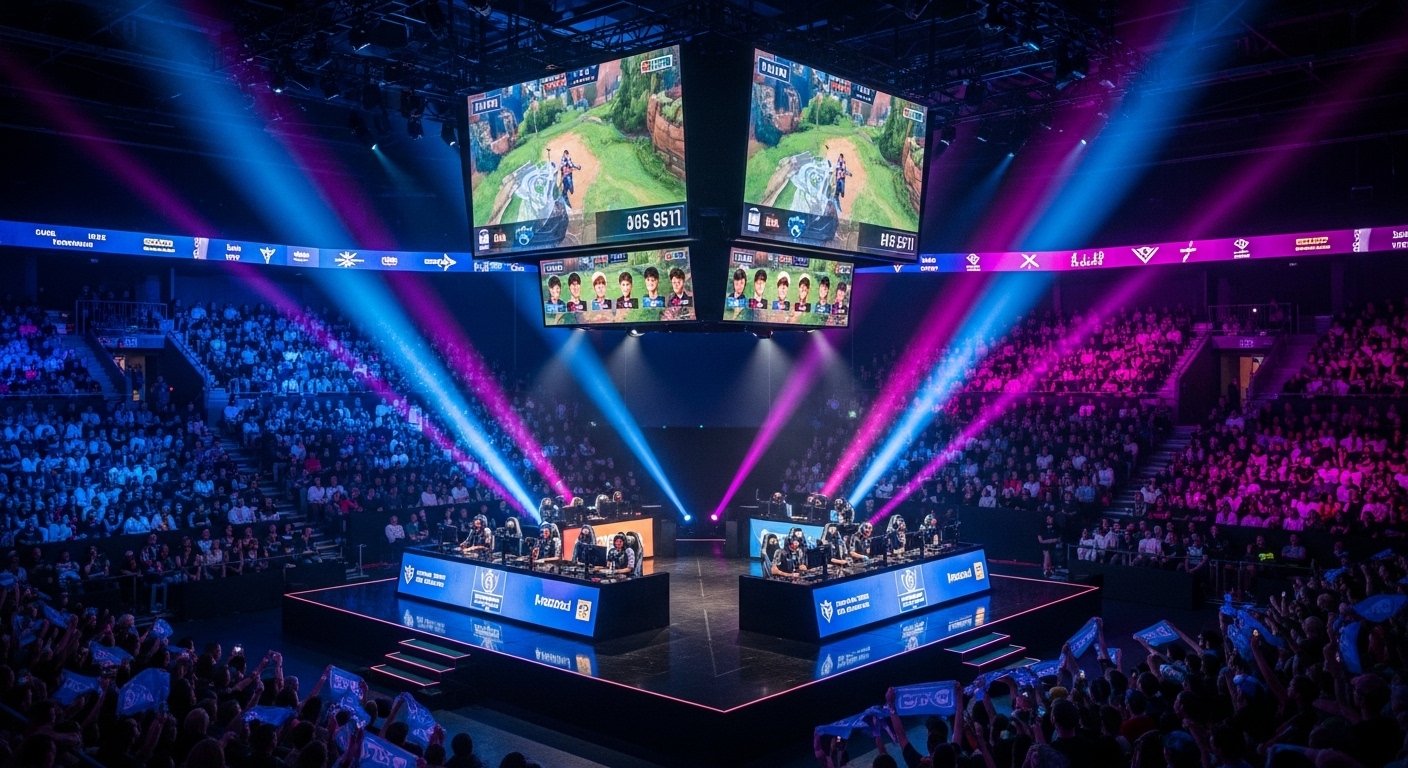
Esports, or electronic sports, is a rapidly growing industry that has moved far beyond its origins as a niche activity for gamers. Today, it is a multi-billion-dollar sector that brings together players, fans, and sponsors from all over the world. Competitive gaming, once considered a hobby for a select few, is now a globally recognized phenomenon, with professional leagues, large-scale tournaments, and passionate fanbases. In this blog post, we will explore how esports has evolved, its impact on culture, the role of technology, and its potential for the future.
The Origins of Esports: From Casual Play to Global Competition
The roots of esports can be traced back to the early days of video games. In the 1970s, the first competitive gaming events took place, including the famous Spacewar tournament in 1972. However, it wasn’t until the 1990s, when the internet began to expand, that esports truly began to take shape. Games like Quake, StarCraft, and Counter-Strike became the foundation for what would eventually become the esports industry. These titles allowed players from different parts of the world to compete in online multiplayer formats, laying the groundwork for the rise of esports as a professional industry.
In the early 2000s, South Korea became a hotbed for esports culture, with StarCraft tournaments being broadcast on national television. This era marked the beginning of the professionalization of competitive gaming, and soon other countries began to develop their own esports scenes. By the mid-2010s, esports had transitioned from a hobbyist pastime to a multi-billion-dollar industry, with large-scale tournaments offering millions of dollars in prize money and attracting global audiences.
Esports Today: A Professional Industry
The modern esports landscape is a far cry from its early days as a grassroots movement. Today, professional esports players are considered athletes in their own right, competing for substantial salaries, sponsorships, and endorsements. Esports tournaments are now major events that fill arenas and are broadcast live to millions of viewers around the world. Games like League of Legends, Dota 2, Fortnite, and Overwatch have become household names, with dedicated professional leagues and teams competing for championship titles.
The rise of esports has given birth to a new class of gaming celebrities, with players like Faker, Ninja, and s1mple gaining massive followings on social media and streaming platforms. These influencers not only compete at the highest level but also engage with their audiences, promoting gaming culture and shaping the future of the industry. As a result, the global esports community has grown into a vibrant, multi-faceted ecosystem that includes players, coaches, analysts, broadcasters, and content creators.
The Role of Technology in Esports
Technology has played a critical role in the rise of esports, providing the tools necessary for global competition. High-speed internet, powerful gaming hardware, and innovative streaming platforms have made it possible for players to compete in real-time and for fans to engage with tournaments from anywhere in the world. Platforms like Twitch, YouTube Gaming, and Facebook Gaming allow millions of fans to watch esports events live, interact with their favorite players, and participate in online communities.
In addition to the accessibility of gaming, the development of new technologies has helped improve the quality of esports. The gaming hardware used by professional players has advanced significantly, with high-refresh-rate monitors, low-latency peripherals, and specialized gaming computers providing players with the best possible experience. Furthermore, the use of data analytics and artificial intelligence (AI) has revolutionized the way players train, analyze opponents, and develop strategies.
Esports as a Spectator Sport: The Rise of Global Viewership
One of the key factors behind the rise of esports is its appeal as a spectator sport. While traditional sports require physical participation, esports relies on the skills of players to entertain millions of viewers. Esports fans watch professional players compete in online and offline tournaments, following their favorite teams and players in the same way that fans of traditional sports follow football or basketball teams. The global reach of esports has helped it surpass the viewership of some traditional sports in terms of online engagement.
The largest esports tournaments now attract huge live audiences, filling arenas like the Staples Center in Los Angeles or the Mercedes-Benz Arena in Berlin. Events such as The International (Dota 2), League of Legends World Championship, and CS:GO Major Championships draw millions of viewers online, with some tournaments reaching viewership numbers that rival the Super Bowl or the FIFA World Cup. Esports broadcasters and streamers also contribute to the experience by providing live commentary, analysis, and insight into the matches, making the viewing experience more engaging for fans.
The Social and Cultural Impact of Esports
Esports is not just about competition; it has become a significant part of modern culture. It has influenced everything from fashion to social interactions, providing a platform for people to connect, share experiences, and participate in gaming communities. The social aspect of esports is particularly evident on streaming platforms, where viewers can interact with players in real-time, discuss strategies, and share their enthusiasm for the games.
Esports has also fostered a sense of belonging for many gamers who identify with a larger community of like-minded individuals. In contrast to the stereotype of gaming as a solitary activity, esports brings people together to celebrate their shared love of competition. Esports events, such as fan meetups and team viewings, create opportunities for fans to socialize, network, and support their favorite players and teams.
Furthermore, esports has played an important role in promoting diversity and inclusion in gaming. The professional scene has become more inclusive, with initiatives aimed at increasing female participation, supporting players from marginalized communities, and making esports more accessible to people of all backgrounds. Women, in particular, have begun to make their mark in esports, with prominent female players, casters, and streamers breaking down barriers and inspiring future generations of gamers.
Esports and the Economy
Esports is a thriving global industry that generates billions of dollars each year. Revenue comes from a variety of sources, including sponsorships, advertising, media rights, ticket sales, and merchandise. Large brands, including tech companies, energy drinks, and apparel brands, have invested heavily in esports sponsorships, further solidifying its place in the mainstream. In fact, some esports tournaments now offer prize pools that rival those of traditional sports events.
The economic impact of esports is also evident in the creation of jobs. As the industry has grown, so too have the number of career opportunities available. Professional players, coaches, analysts, and broadcasters make up just a small portion of the esports workforce. In addition to these roles, esports organizations require content creators, event organizers, marketers, and legal professionals. The rise of esports has also given birth to new business ventures, including esports training facilities, online coaching services, and gaming-focused merchandise lines.
The Challenges Faced by Esports
Despite its growth and success, esports faces several challenges. One of the most significant issues is the potential for burnout among professional players. The demands of training, competing, and maintaining an online presence can take a toll on players’ physical and mental health. As a result, many esports organizations have started offering support systems, including mental health services, fitness programs, and lifestyle coaching, to help players maintain a healthy balance between work and well-being.
Esports also faces criticism for its lack of standardized regulation and infrastructure. While some games, such as League of Legends and Dota 2, have developed well-organized leagues with clear rules and regulations, other titles still lack consistent frameworks. Additionally, issues related to cheating, match-fixing, and the use of performance-enhancing tools remain a concern. As esports continues to grow, establishing clear governance structures and ensuring fairness in competition will be critical to its long-term sustainability.
The Future of Esports
The future of esports looks incredibly promising, with continued technological advancements and an ever-growing global fan base. New games and esports leagues will continue to emerge, diversifying the competitive landscape and creating fresh opportunities for players and fans alike. As virtual reality (VR) and augmented reality (AR) technologies improve, esports may evolve into more immersive and interactive experiences, offering fans and players a completely new way to engage with competitions.
The integration of esports into mainstream events is also on the horizon. Esports is already being included in large multi-sport events, such as the Asian Games, and there are discussions about including esports in the Olympics. This further highlights the legitimacy of esports as a competitive discipline and an integral part of the global sporting landscape.
Furthermore, the increasing popularity of esports in schools and universities will play a crucial role in the development of future talent. As more educational institutions offer scholarships and dedicated esports programs, we can expect to see the next generation of esports stars emerge from academic settings.
Conclusion: Esports as the Future of Competitive Entertainment
Esports has transformed from a niche hobby into a global industry that is reshaping how we think about competition and entertainment. Its explosive growth, the rise of professional players and teams, and the cultural impact it has had on society have made esports an integral part of the modern entertainment landscape. As technology continues to evolve and the global esports community expands, esports will only continue to thrive, offering new experiences, opportunities, and excitement for players and fans alike.
In many ways, esports represents the future of competitive entertainment. It challenges the traditional definition of sports, providing a platform for digital athletes to showcase their skill, strategy, and teamwork on the world stage. As the industry matures and faces challenges, it will continue to evolve, creating a lasting legacy that will influence the world of gaming and entertainment for years to come.