
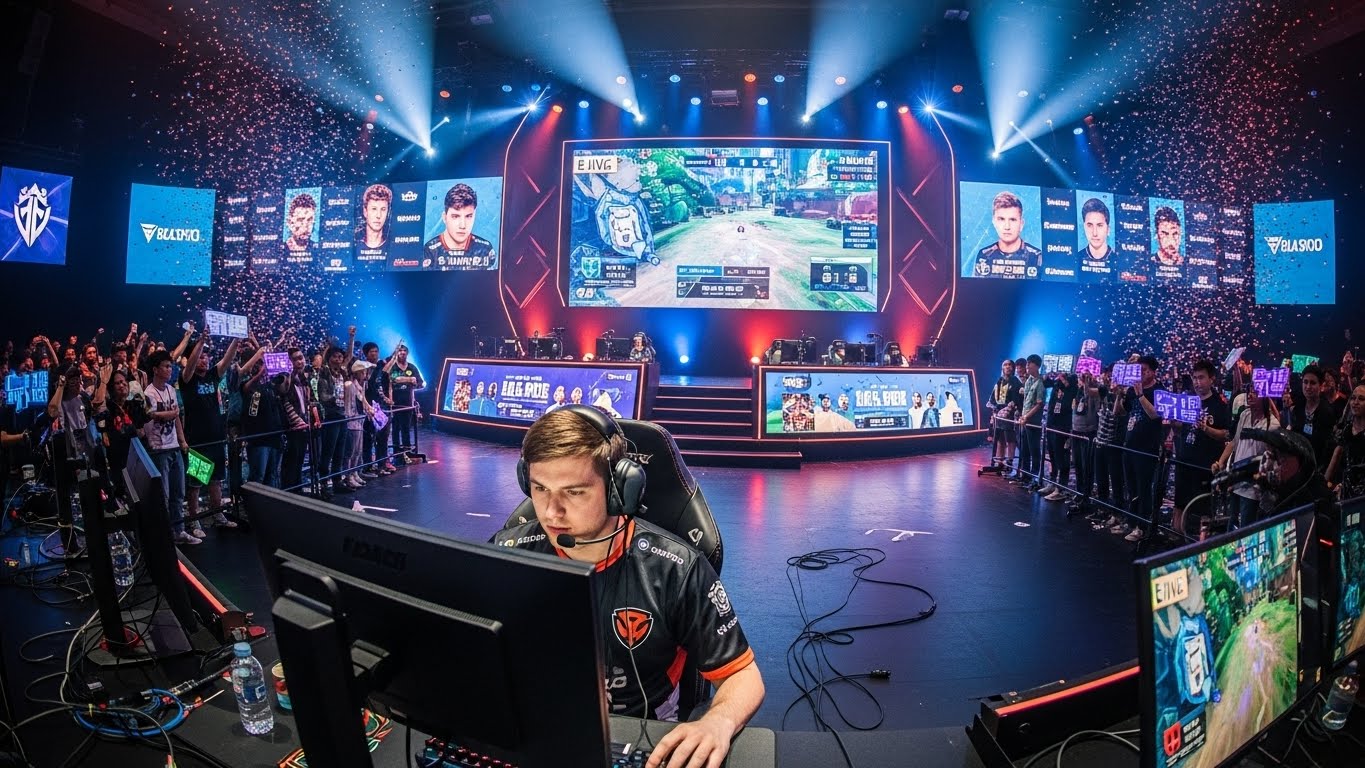
In recent years, esports has evolved from a niche hobby to a global industry that commands millions of viewers, substantial investments, and a rapidly growing cultural footprint. The days of playing video games for fun and personal satisfaction are long behind, as esports has become a serious competitive pursuit with professional players, massive sponsorship deals, and major tournaments watched by people around the world. This transformation has not only altered the way games are played but has also impacted entertainment, social media, and even the economy. In this post, we’ll explore the rise of esports, its current state, and what the future holds for this rapidly expanding industry.
The Origins of Esports
Esports, short for “electronic sports,” traces its roots back to the early 1990s when competitive gaming was still in its infancy. The first notable esports event took place in 1997 with the “Red Annihilation” tournament for the popular first-person shooter Quake. This tournament offered a modest prize pool, but it paved the way for larger, more organized competitions in the years to follow.
During the late 1990s and early 2000s, a number of multiplayer games like StarCraft, Warcraft III, and Counter-Strike helped esports gain traction, particularly in South Korea. South Korea is often regarded as the birthplace of professional esports, with the rise of StarCraft tournaments and dedicated esports TV channels in the early 2000s. The nation’s high-speed internet infrastructure and early adoption of online multiplayer gaming set the stage for esports to become a mainstream phenomenon. By the mid-2000s, the popularity of games such as League of Legends and Dota 2 further cemented esports as a major global industry.
The Growth of Esports as an Industry
In the last decade, esports has exploded onto the global stage in a way few could have predicted. What was once a small, underground scene is now an entertainment juggernaut. This growth can be attributed to several factors, including advancements in technology, the rise of streaming platforms like Twitch, and the increasing involvement of mainstream media and corporate sponsors.
Technology and the Digital Revolution
The exponential growth of esports can be traced to improvements in technology that have made both playing and watching games more accessible. High-speed internet, improved game servers, and increasingly powerful gaming hardware have allowed players from around the world to compete with each other in real-time. Cloud gaming and streaming platforms have made it easier than ever for fans to tune into their favorite games and tournaments.
In addition, the availability of high-quality streaming services like Twitch and YouTube Gaming has played a crucial role in bringing esports to the masses. These platforms allow fans to watch live tournaments, interact with their favorite streamers, and even participate in the conversation through real-time chat.
Sponsorships, Investments, and Corporate Involvement
Esports is no longer a niche market; it’s a big business. Large companies such as Coca-Cola, Intel, and Samsung have invested millions of dollars into the industry, creating sponsorships and partnerships with top teams and tournaments. Brands see esports as a valuable way to reach a younger, tech-savvy audience that is often difficult to engage through traditional advertising channels.
In addition to sponsorships, esports organizations have attracted investments from venture capitalists and even traditional sports team owners. The success of esports leagues such as the Overwatch League and the League of Legends Championship Series has demonstrated that there is real financial potential in the industry. These investments have helped to professionalize esports, creating a more structured environment with lucrative prize pools, team salaries, and media rights deals.
The Global Appeal of Esports
Esports is a truly global phenomenon, with players, fans, and tournaments spanning every continent. The accessibility of online gaming has made it easy for players to compete across borders, and many games now feature global rankings that allow players from different countries to compete on a level playing field.
One of the most appealing aspects of esports is its inclusivity. While traditional sports often require significant physical skill, esports levels the playing field by allowing people of all backgrounds, genders, and physical abilities to compete. This inclusivity has led to a diverse and vibrant esports community, with players from all over the world coming together to showcase their talents.
In addition to the players, esports has also built a global fanbase. Major tournaments like The International for Dota 2 and League of Legends Worlds attract millions of viewers worldwide. These tournaments are broadcast in multiple languages and are often held in massive arenas or broadcasted online. The global fanbase has helped elevate esports to the level of traditional sports, with esports competitions being broadcast on mainstream TV channels, in stadiums, and even in movie theaters.
The Esports Ecosystem: Teams, Tournaments, and Fans
At the heart of esports lies a vibrant ecosystem consisting of professional teams, top-tier players, tournament organizers, and, of course, passionate fans. This ecosystem has grown rapidly and has become a key part of the entertainment industry.
Professional Teams and Players
Esports is now home to professional players who dedicate their lives to perfecting their craft. These players train for hours every day, competing in regional and international competitions, all while managing their public personas and brand partnerships. Many top players have become celebrities in their own right, with large followings on social media platforms and lucrative sponsorship deals.
Esports teams have also become highly organized, with coaching staff, analysts, and managers who help players perform at their best. Similar to traditional sports teams, esports organizations often sign players to long-term contracts, offer performance bonuses, and invest in team facilities where players can practice, review footage, and strategize.
Tournaments and Leagues
Esports tournaments have grown in scale and prestige. Some of the most famous events include The International, which is the annual Dota 2 championship, and League of Legends World Championship, which has become one of the largest esports events in the world. These tournaments often feature multimillion-dollar prize pools, with the top players taking home substantial winnings.
In addition to one-off tournaments, organized esports leagues have gained popularity. The Overwatch League, for example, is modeled after traditional sports leagues like the NFL and NBA, with teams competing in regular season matches, playoffs, and a grand final. These leagues provide a sense of continuity and structure to the esports scene, offering fans a year-round schedule of events to follow.
Fans and Community Engagement
The role of the fan in esports is more than just passive viewing; fans are active participants in the ecosystem. They cheer on their favorite players, interact with streamers on social media, and even create fan art and content related to their favorite games and teams. Esports organizations often engage directly with fans through social media platforms, live streams, and events.
The close relationship between players and fans in esports has led to the creation of a unique fan culture. Fans often form communities centered around their favorite games, players, and teams. These communities interact through platforms like Reddit, Discord, and Twitter, and fans can even attend live events to meet their idols and show support.
The Future of Esports: Where Do We Go from Here?
Esports is still in its infancy, and the future looks incredibly bright. As the technology behind gaming and broadcasting continues to improve, esports will become even more immersive, interactive, and accessible. Augmented reality (AR) and virtual reality (VR) may revolutionize the way we experience esports, offering new ways to engage with the action.
Esports will also continue to expand into new territories. While the industry is well-established in countries like South Korea, China, and the United States, there is still significant untapped potential in regions like Africa, Latin America, and the Middle East. As internet infrastructure improves and more people gain access to high-quality gaming devices, these regions could become major players in the esports ecosystem.
Another area to watch is the increasing crossover between esports and traditional sports. As more professional sports leagues and teams invest in esports, the lines between the two industries will continue to blur. Some traditional athletes have already dabbled in esports, either by partnering with esports teams or by competing themselves. This crossover could help further legitimize esports in the eyes of the mainstream public.
Conclusion
Esports has come a long way from its humble beginnings in arcades and LAN parties to become a massive global industry. With millions of fans, professional players, and high-stakes tournaments, esports is now firmly entrenched in the fabric of modern entertainment. The growth of the industry is showing no signs of slowing down, and as technology advances and new markets open up, the future of esports looks brighter than ever.
As we look ahead, one thing is certain: esports is here to stay, and it will continue to redefine the boundaries of competitive gaming and entertainment for years to come.