
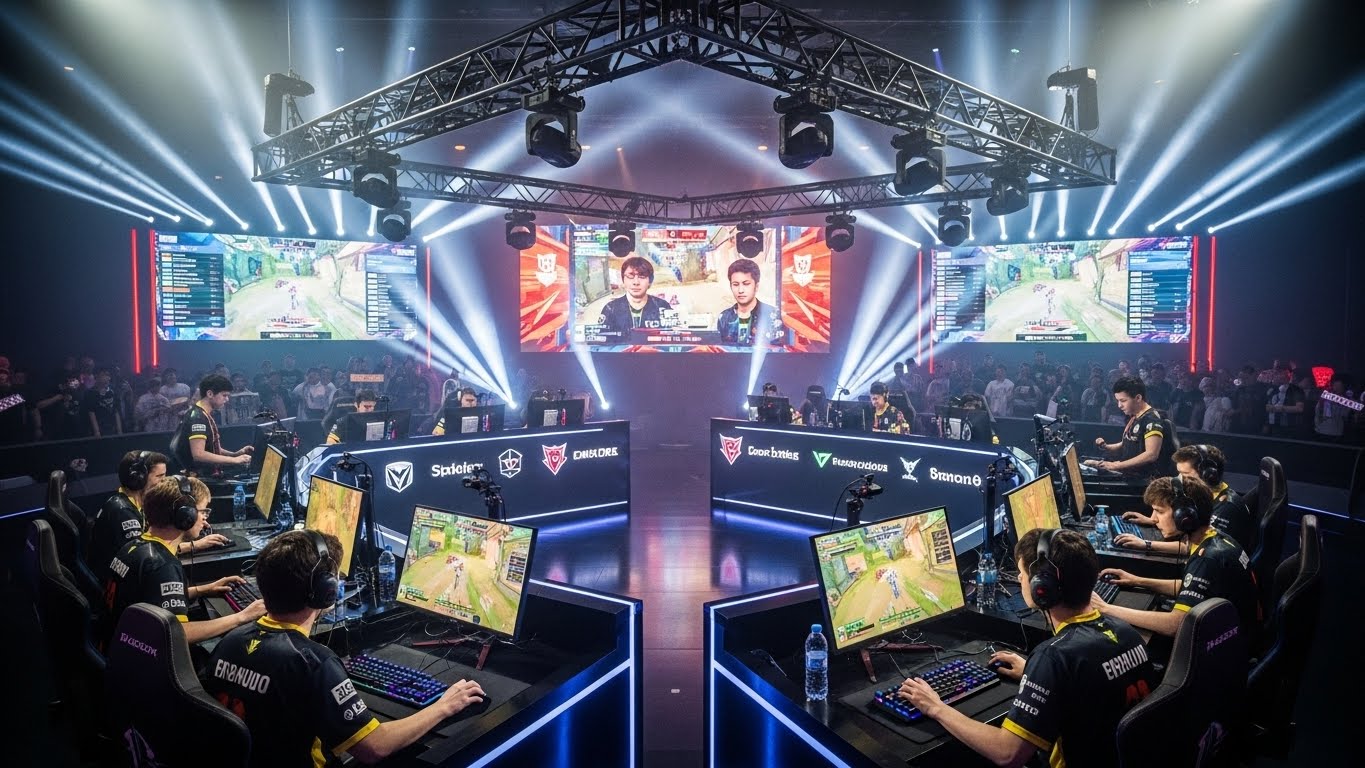
In recent years, esports has transitioned from a niche pastime into a global phenomenon, capturing the hearts of millions across the world. With the rapid growth in viewership, professional players, and massive prize pools, competitive gaming has firmly established itself as a major player in the entertainment industry. But what exactly is esports, and why has it gained such massive popularity? This blog will explore the evolution of esports, its cultural impact, the future of the industry, and how it’s redefining the way we perceive traditional sports.
What is Esports?
Esports, short for electronic sports, refers to organized, multiplayer video game competitions, particularly between professional players, individually or as teams. These competitions often take place in front of live audiences or are broadcasted online to millions of viewers. Popular esports titles include games like League of Legends, Dota 2, Counter-Strike: Global Offensive (CS:GO), Fortnite, and Overwatch, among others. These games are played at the highest level in tournaments, which often feature significant prize pools, sponsorship deals, and media coverage.
Esports has transcended from the realm of casual gaming to a high-stakes, professional activity, where players are trained, sponsored, and supported by teams or organizations. The players themselves are often compared to traditional athletes, and the tournaments are regularly televised or streamed on platforms like Twitch, YouTube, and Facebook Gaming.
The Evolution of Esports: From Hobby to Career
Esports didn’t emerge overnight. Its roots trace back to the early days of competitive gaming, with the first recorded esports event being held in 1972, when Stanford University hosted the “Intergalactic Spacewar Olympics.” However, it wasn’t until the late 1990s and early 2000s that esports began gaining momentum. The rise of games like StarCraft and Quake paved the way for competitive tournaments, particularly in countries like South Korea, where esports became a mainstream spectacle.
In the mid-2000s, the proliferation of online gaming and streaming platforms allowed competitive gaming to reach a global audience. Games like Warcraft III and Counter-Strike led the charge in popularizing esports on a global scale. As the popularity of these games grew, so did the prize pools, sponsorship deals, and professional teams, creating a business around esports that resembled traditional sports leagues.
Fast forward to today, and esports is a multi-billion-dollar industry. With tournaments like The International (Dota 2’s world championship) offering prize pools exceeding $40 million, it’s clear that esports has reached new heights, rivaling some of the biggest traditional sports events in terms of viewership and revenue generation.
Esports: The Cultural Impact
Esports has had a profound impact on global culture. Not only has it created a new form of entertainment, but it has also shaped how we think about gaming as a whole. Gaming, once seen as a solitary or childish activity, is now recognized as a legitimate profession. Esports players are celebrities in their own right, with millions of fans following their every move both online and offline.
Streaming platforms like Twitch have played a crucial role in transforming competitive gaming into a spectator sport. Fans can watch their favorite players and teams in real-time, interact with them via chat, and immerse themselves in the world of competitive gaming. These platforms have also given rise to a new generation of content creators who have built careers around gaming, from streamers and commentators to analysts and influencers.
Esports has also fostered a sense of community, where fans and players alike can connect over shared interests. Whether it’s participating in online tournaments or engaging in heated debates about game strategies, esports has created a culture that’s both inclusive and interactive. The global nature of esports means that fans from different countries and cultures can come together to celebrate their love for gaming.
The Economics of Esports: A Billion-Dollar Industry
One of the key reasons for the meteoric rise of esports is the massive financial potential of the industry. With millions of viewers tuning into esports events, brands and sponsors have quickly realized the power of aligning themselves with the esports community. Big-name companies such as Coca-Cola, Intel, and Nike have all made significant investments in esports, either through sponsorship deals or direct involvement in tournament organization.
Esports revenue comes from multiple streams, including advertising, sponsorships, media rights, merchandise sales, and ticket sales for live events. The largest esports organizations and tournament organizers often sign multimillion-dollar sponsorship deals with global companies, who see esports as an effective way to engage with the coveted millennial and Gen Z demographics.
Prize pools in esports tournaments have exploded in recent years. For example, The International 10, the world championship for Dota 2, boasted a prize pool of over $40 million, with the winning team taking home $18 million. These massive sums are not only a reflection of the competitive nature of the industry but also the growing financial support from both public and private sector investments.
Additionally, the growth of esports media rights has brought in substantial revenue. Streaming platforms like Twitch and YouTube offer exclusive broadcasting deals for major esports tournaments, while media companies are beginning to recognize esports as an important content category to attract younger audiences. With esports being broadcast on television in some regions, the viewership numbers rival traditional sports broadcasts, cementing esports as a force to be reckoned with.
The Rise of Esports as a Career
One of the most exciting aspects of the esports boom is the rise of professional players and teams. Just like athletes in traditional sports, esports players dedicate their lives to mastering their craft. They practice for hours every day, strategize with their teams, and undergo physical and mental training to stay at the top of their game.
The life of a professional esports player is demanding. Many players begin their careers in their teenage years, often juggling their education with gaming. Some organizations even offer scholarships and training programs for young, up-and-coming players. As players rise through the ranks and make a name for themselves, they can secure sponsorships, join prestigious teams, and participate in global tournaments that offer life-changing sums of money.
However, the career lifespan of an esports player can be relatively short, especially in highly competitive games. Due to the fast-paced nature of esports, players must continuously adapt and stay on top of the latest strategies, game updates, and meta changes. As a result, many players transition into other roles within the esports ecosystem, such as coaching, broadcasting, or team management, ensuring that their careers can continue to flourish long after they’ve hung up their virtual gloves.
The Future of Esports: What Lies Ahead?
The future of esports looks incredibly promising. As technology continues to advance, the experience of playing and watching esports is only going to improve. Virtual reality (VR) and augmented reality (AR) technologies are expected to revolutionize the gaming experience, potentially leading to new types of esports competitions that blend the digital and physical worlds.
Furthermore, the integration of esports into traditional sports continues to gain momentum. In 2020, the Olympic Games considered including esports as a medal event, a sign that traditional sports organizations recognize the growing influence of esports. As esports becomes more mainstream, there are also growing discussions around regulating the industry, ensuring fair play, and addressing issues such as player welfare, team contracts, and intellectual property.
Esports also has the potential to bring about a positive social impact. Initiatives such as Esports for Social Good use the power of gaming to raise awareness for various causes, promote inclusivity, and give back to communities. Esports has become a tool for social change, breaking down barriers and providing opportunities for people of all backgrounds to participate in the gaming world.
Conclusion: A New Frontier in Entertainment
Esports has evolved from a niche interest to a global entertainment juggernaut. What started as a hobby for a small group of dedicated gamers has blossomed into a professional and highly lucrative industry that rivals traditional sports. The growth of esports has not only transformed how we view gaming but has also impacted the cultural, social, and economic landscape of the modern world.
With millions of fans tuning in to watch tournaments, athletes competing at the highest level, and companies flocking to invest in the industry, it’s clear that esports is here to stay. As the industry continues to grow and evolve, the future of esports looks brighter than ever, with new technologies, opportunities, and challenges on the horizon.
Whether you’re a casual gamer or a die-hard fan, there’s no denying that esports is revolutionizing the world of entertainment. It’s no longer just about playing games – it’s about experiencing them at a whole new level.